
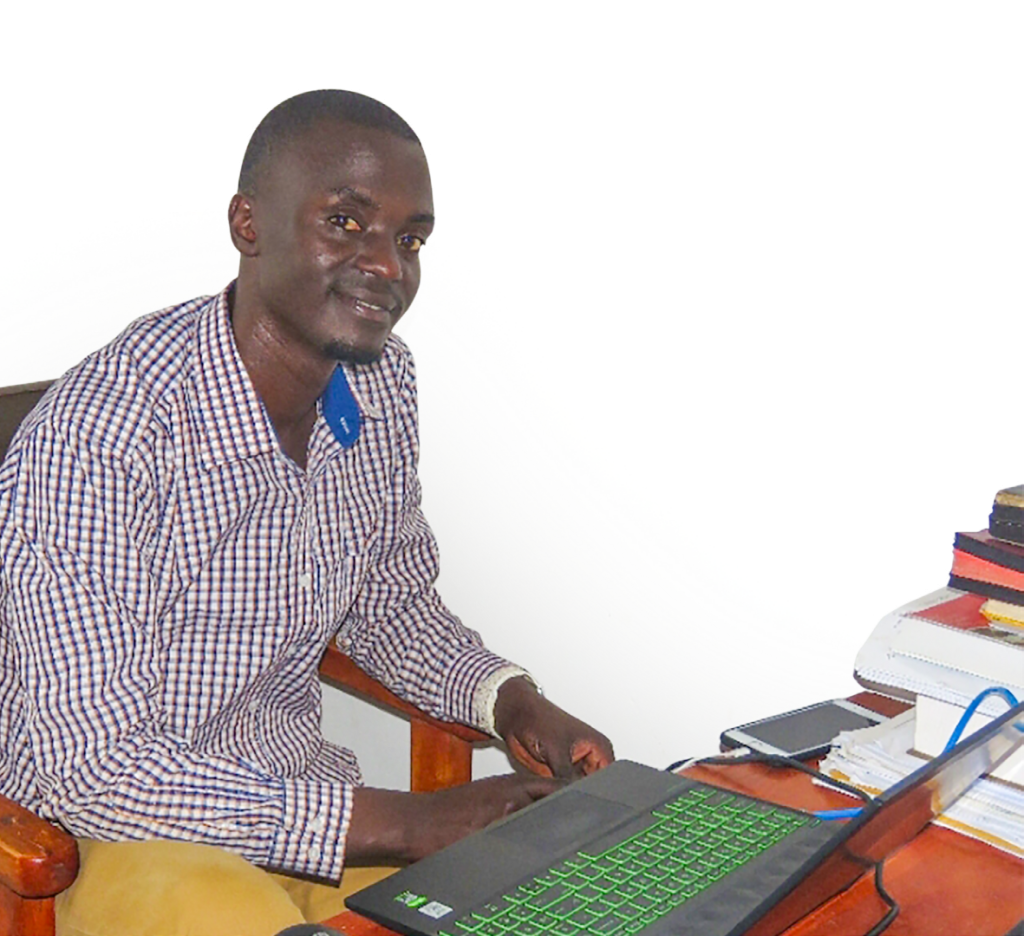
The role of technology in modern-day organizations cannot be overstated. Every sector of the economy, from health and finance to agriculture and education, has had to embrace technology to remain competitive and relevant in today’s fast-paced world. The Church is not left out of this trend. As a matter of fact, the Church, which is often seen as traditional and slow to adapt to change, has had to embrace technology to remain relevant and meet the needs of its congregation.
One way the Church, through our Bishop, has embraced technology is through the establishment of an Information Technology (IT) office. An IT office in a church-based organization such as a Diocese is responsible for managing the technological infrastructure of the organization. This includes hardware such as computers, servers, and printers, as well as software such as databases, content management systems, and website development tools. The IT office is also responsible for ensuring that the organization’s data is secure and protected from cyber threats.
In recent times, the role of IT offices in church-based organizations has become even more important. The COVID-19 pandemic forced churches to limit physical gatherings and rely more on online platforms to connect with their congregation. This has led to a surge in demand for IT services such as live streaming of services, online donation platforms, and virtual meetings.
One key advantage of having an IT office in a church-based organization is the ability to reach a wider audience. With the rise of social media platforms, churches can now connect with people all over the world. This has led to an increase in the number of people attending online services, which has in turn led to an increase in means of spreading the gospel of Christ and thus mobilizing support for the organization’s mission.
The use of technology in a church-based organization also helps to enhance communication within the organization. With the use of email, messaging apps, and video conferencing tools, staff and volunteers can now communicate more effectively and efficiently. This has led to an increase in collaboration and teamwork, which has in turn led to improved productivity and a better overall experience for the congregation.
Furthermore, the use of technology in our Diocese has enabled us to establish the Diocese on all social media platforms and gather a huge following across the world.
In conclusion, I thank my Lord Bishop the Rt Rev Stephen Namanya for finding it necessary and establishing the Information Technology office at the Diocese, which has eased communication, established a diocesan website (www.northankolediocese.org), installed office Wi-Fi at the Diocesan headquarters and Bishops Girls School computer lab. This has enabled the Diocese to conduct live streams of major diocesan events, update the social media, document all diocesan functions such as taking pictures and capturing videos, train staff on new technology trends, and helped them in making key cyber secure decisions among others.
The link between ministry and technology is not immediately obvious. In fact, it can be easy to question whether technology has any place in the church at all.
Still, as ministries around the country continue to incorporate various modes of technology into their day-to-day operations, it becomes paramount to examine God’s Word on the subject.
“Sowing seeds on as much soil as possible.”
This passage explains the parable of the sower. Sowers do not limit themselves to certain soils; instead, they spread seeds everywhere on the soils available, even those thought to be less fertile. For, though uncommon, sometimes these seeds are able to flourish into something beautiful.
As Christians, we are expected to do the same. We should not be selective in whom we extend ourselves to, but rather aim at spreading Christ’s message to as many people as possible. Technology lets us connect with a bigger audience than ever before.
“How beautiful are the feet of those who carry good news.”
In biblical times, the only way to “carry” good news was to bring it physically, walking from one place to another. Technological advances, however, have opened numerous additional communication channels, all of which we can use to amplify the rate at which we spread the Word.
Great Commission: Go make disciples of all nations
Jesus tells us to go out and make disciples of all nations—to spread the Word to people wherever they are. These days, people spend an increasing amount of time on their laptops, tablets, and iPhones. Should we not use the technology available to us and meet them there? We are called to extend the message to people wherever they are, and technology allows us to do exactly that.
“The eye cannot say to the hand, ‘I don’t need you!’ And the head cannot say to the feet, ‘I don’t need you!’”
Every member of your congregation is blessed with a different set of skills and talents—embracing all of them is essential to building a strong community.
While you may excel in teaching or shepherding, others may find their strengths in technology. God bestowed each person with these gifts for a reason. Create an environment that encourages people to take advantage of their skills sets and use them in ways that glorify Him.
We live in a world that is constantly evolving and adapting. Emerging technologies need not contradict our beliefs; instead, they can actually help us spread God’s word. When we look to scripture for guidance, we learn that leveraging new advancements can fit in perfectly with what we are setting out to do—to reach more lives.